
Paysera removes bank transfer fee for merchants in the Baltic States


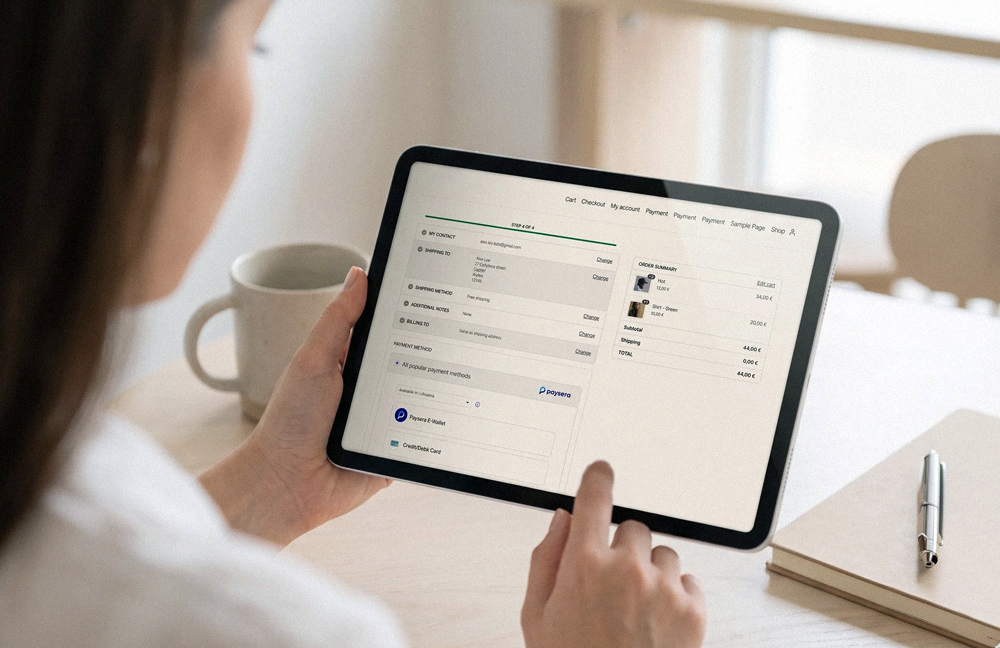
Payments company Paysera has stopped charging a fee for bank transfers collected through the payment initiation service (PIS) in the Baltic States. The change takes effect with the launch of the new Checkout Modern payment platform, which is now open to all of the company's merchants in Lithuania, Latvia, and Estonia.
More than 10,000 merchants in the Baltic States use the Paysera Checkout payment gateway. In total, the service operates in 42 countries and covers more than 13,000 active payment projects, though free bank transfers are currently offered only in the three Baltic States.
Until now, two pricing models have dominated online retail payments: a percentage fee on the card transaction, or a fee per bank transfer. On the new platform, Paysera is dropping the second.
The platform's own data shows the logic behind the decision: two out of three payments made through it (66%) are bank transfers rather than card transactions. At the same time, the market price of the payment initiation service has fallen so far that the fee brings the company little revenue, while the merchant still pays for it as a separate line.
A single bank transfer costs 5–20 cents on the market. At those rates, a shop collecting a thousand bank transfers a month would save between 600 and 2,400 EUR a year.
"In the Baltic States, buyers choose a bank transfer more often than a card – on our platform, two purchases out of three are paid for that way. Once the market price of the service fell to a few cents, charging for it separately stopped making sense for us or for the merchant, so we are dropping the fee. Cards remain important, but they should not be the only method a business can afford," says Justina Šidlauskienė, CEO of Paysera.
What Checkout Modern is
The platform replaces the Checkout system used until now. In a single payment window it brings together bank transfers made through open banking, card payments (Visa, Mastercard), and the Apple Pay and Google Pay digital wallets. A buy now, pay later solution with Inbank is offered alongside them. Bank transfers work in Lithuania, Latvia, and Estonia – the main banks in these countries are connected directly to the platform.
The new version introduces a payment splitting (Split) function, which automatically divides a single payment from a buyer among several recipients. The solution is intended for marketplaces, where money has to reach several sellers. Activation of card payments has also been simplified, and project management in the merchant module has been updated.
Integration and expansion
Merchants can connect through ready-made plugins for the WooCommerce (WordPress), PrestaShop, OpenCart, and Shopify platforms – with Magento to follow shortly – or through the API.
In the self-service area, merchants manage projects and payment methods themselves, monitor transactions in real-time and issue full or partial refunds. Payment links can also be created, making it possible to collect payments even without a website. The platform complies with the PCI DSS standard for card payments.
The old Checkout version will continue to operate and will be supported until banks in every country the service currently covers are connected to the new platform. The PIS fee remains in force there. To move to the new Checkout, a merchant only needs to install the new Paysera plugin on their e-shop platform and create a new payment project in self-service. Once the plugin is installed and the project activated, the new system starts working immediately.
Bulgaria's UBB bank is already connected to the new platform, and integrations with eight more banks in Romania and Bulgaria are being built – the company plans to expand into these markets.